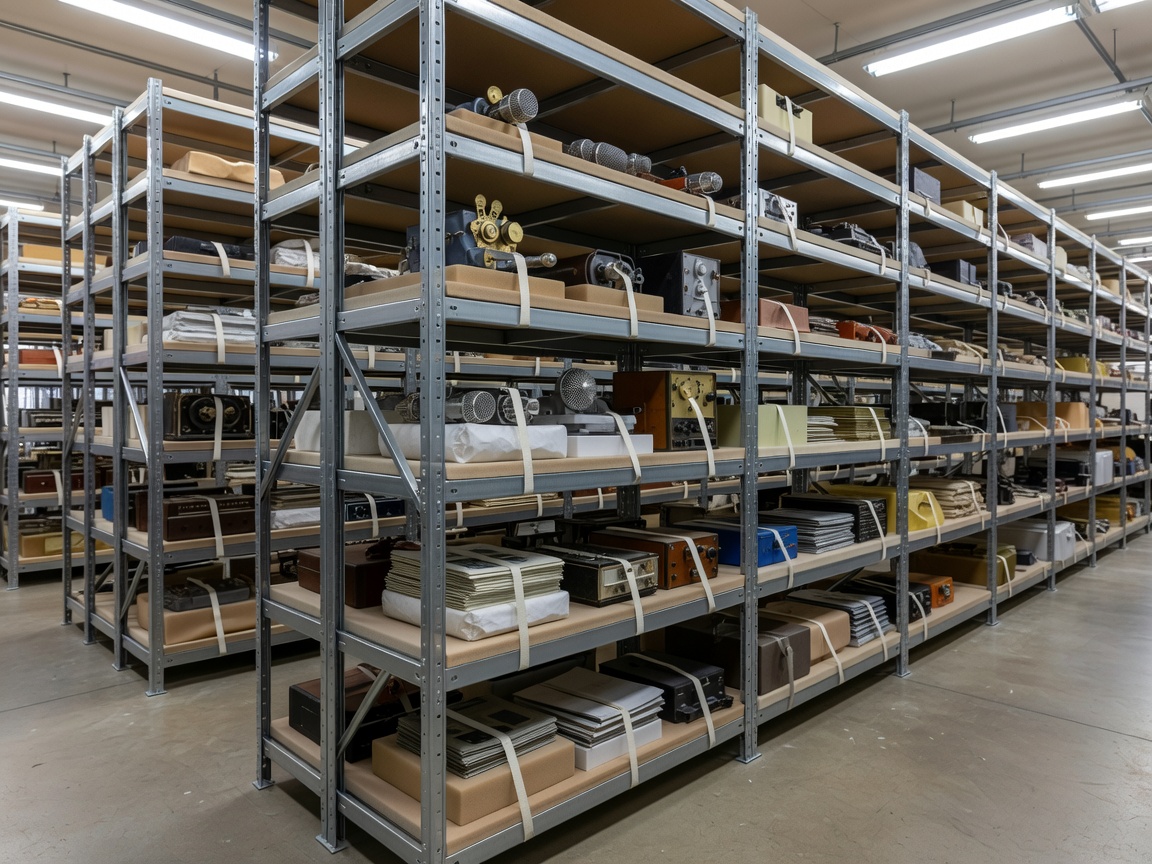
Why organization matters
Cultural venues hold equipment with different sizes, uses, handling needs and return dates. Theatre cases may move frequently. Exhibition furniture may remain unused between changeovers. Gallery preparation materials may need quick access while larger temporary structures need a planned location. Treating every item as identical creates wasted space, unnecessary handling and uncertain retrieval.
Organized storage does not mean a single universal layout. It means that the layout reflects the work. Equipment should be grouped by function, venue area, project, ownership or operational use. The selected logic must be understandable to the people who prepare, return and retrieve items.
Classify before allocating space
Start with a list of equipment categories. Include cases, props, staging components, furniture, display hardware, signage, handling aids and general operational items. Record quantity, dimensions, approximate weight considerations, condition and packaging status. Note whether an item is complete, partly assembled, nested, boxed or awaiting inspection.
Classification supports space planning. Shelving may suit labelled containers and smaller components. Larger floor locations may suit furniture or temporary structures. Protective containers can separate fragile equipment from routine handling items. The right category is determined by the object and its use, not by a generic storage label.
Plan for access
Access frequency should influence location. Frequently used equipment should be identifiable and reachable through the venue’s approved procedures. Items used only for annual exhibitions may be placed in less accessible areas, provided their location is recorded and the route remains suitable. Retrieval planning should consider sequence, not only distance. Group equipment that travels together where practical.
Temporary storage can support a live project, event or changeover. It benefits from clear end dates, project labels and a review point. Longer-term storage needs stronger location discipline, periodic condition checks and a process for items that are no longer required. Neither approach removes the need for accurate records.
Packaging and handling
Packaging should match the equipment. Use appropriate containers, separators and protective materials selected by competent venue personnel. Avoid packing equipment while damp, dirty or unidentified. Consider access to handles, covers and inspection points. Do not improvise lifting, stacking or access methods where the item requires qualified assessment.
Identification can combine a unique item or group reference with a location code and a short description. Labels should remain legible and should not damage the equipment. A location record should explain where an item belongs, while a condition record explains its state. These are related but separate functions.
Planning checklist
- List category, quantity, dimensions and condition.
- Record handling and packaging requirements.
- Assign access frequency and retrieval priority.
- Separate temporary and longer-term requirements.
- Choose shelving, containers or floor locations by equipment type.
- Define labels, location codes and movement records.
- Review environmental considerations with appropriate venue specialists.
- Set a date for checking unused or unreturned equipment.
This approach is useful for cultural venues, theatres, museums, galleries, exhibition spaces and performance organizations. It does not replace venue-specific safety procedures, conservation advice or qualified assessments for sensitive objects.