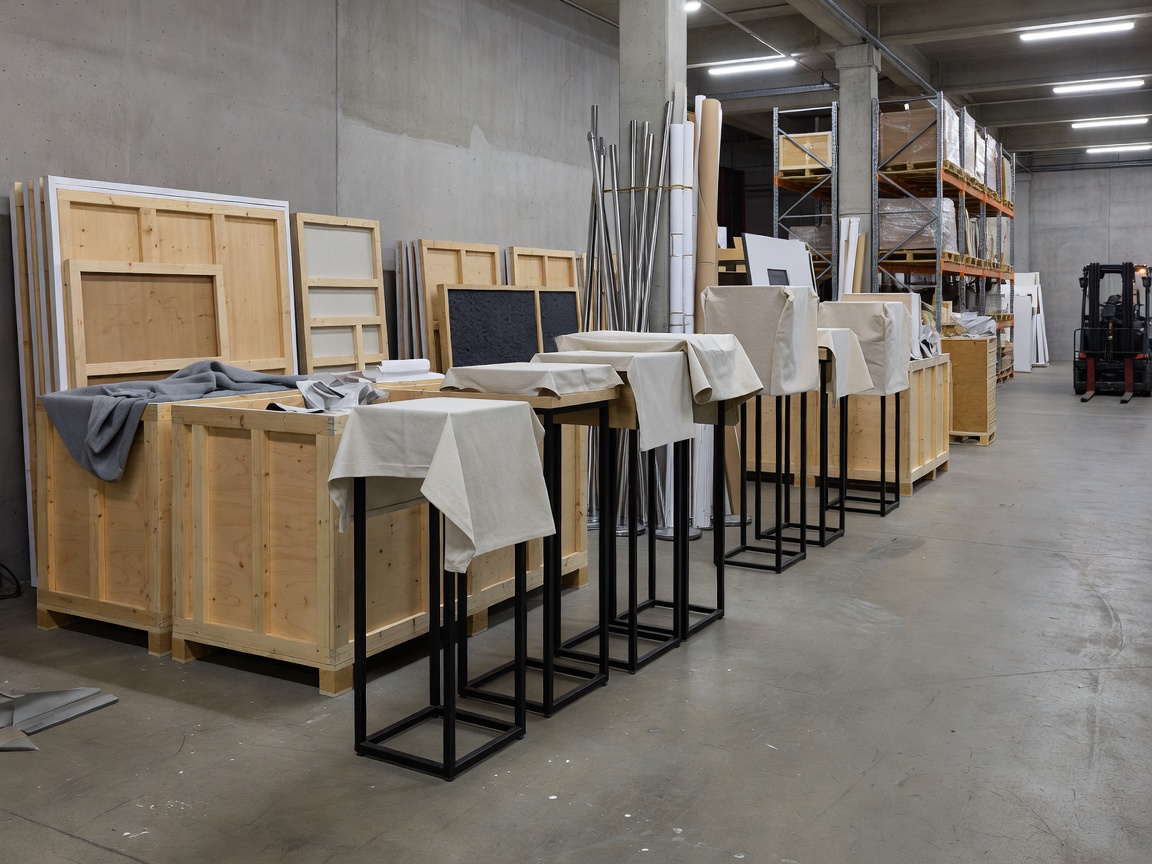
Define the equipment boundary
Museums and galleries use a wide range of non-collection equipment. This can include exhibition furniture, display cases, temporary walls, plinths, signage hardware, barriers, mounts used for display systems, handling equipment and gallery preparation materials. Each category can have a different size, packaging need and access pattern.
Equipment storage must be distinguished from conservation storage. General equipment guidance is not suitable for artwork, collection objects or other sensitive materials. Collection care, environmental requirements, packing materials and handling methods must be determined by appropriate conservation and collections personnel.
Plan for changeovers
Exhibition changeovers create concentrated demand. Equipment may be removed, checked, packed, labelled and returned within a defined project window. A temporary staging area can support this work, but it should have a clear owner, project reference and review date. Without an end point, temporary storage becomes an unrecorded secondary store.
Group components that are used together where practical. A display system may include panels, fixings, signage, protective corners and a case or trolley. Record the group and its individual components when separation would affect completeness. Large furniture and temporary walls need locations that account for dimensions and approved access routes.
Packaging and condition records
Packaging protects equipment from routine contact and makes repeat storage easier. Select containers, separators and covers for the material and shape. Mark the contents clearly. Do not place unidentified equipment into a sealed container. Before storage, remove avoidable dirt or residue only through approved venue procedures; this is not conservation treatment.
Condition documentation should describe the state of equipment at a useful level. Note visible damage, missing parts, surface issues, instability or packaging concerns. A condition record supports decisions about reuse and repair. It does not assess artwork or collection objects. If equipment has a conservation, safety or structural implication, refer it to the relevant qualified specialist.
Access and location
Exhibition teams may need fast access to signage, tools, plinths or small display components during preparation. Larger structures may be accessed less frequently but require reliable location information. Use a location code, category and concise description. Record movement between a preparation area, gallery and storage location. The record should show whether the item is available, in use, incomplete or awaiting review.
Temporary storage is useful during an active changeover. Longer-term storage requires periodic review, especially where materials, packaging or venue conditions may affect equipment. Storage duration should be recorded at the point of entry, with an expected next-use period where known.
Practical checklist
- Separate equipment storage from conservation storage.
- List furniture, structures, cases, plinths and signage hardware.
- Record dimensions, quantity, condition and packaging.
- Group components without hiding missing parts.
- Assign access priorities for changeovers and gallery preparation.
- Use qualified advice for sensitive objects, conservation or structural concerns.
- Review temporary locations before the project closes.