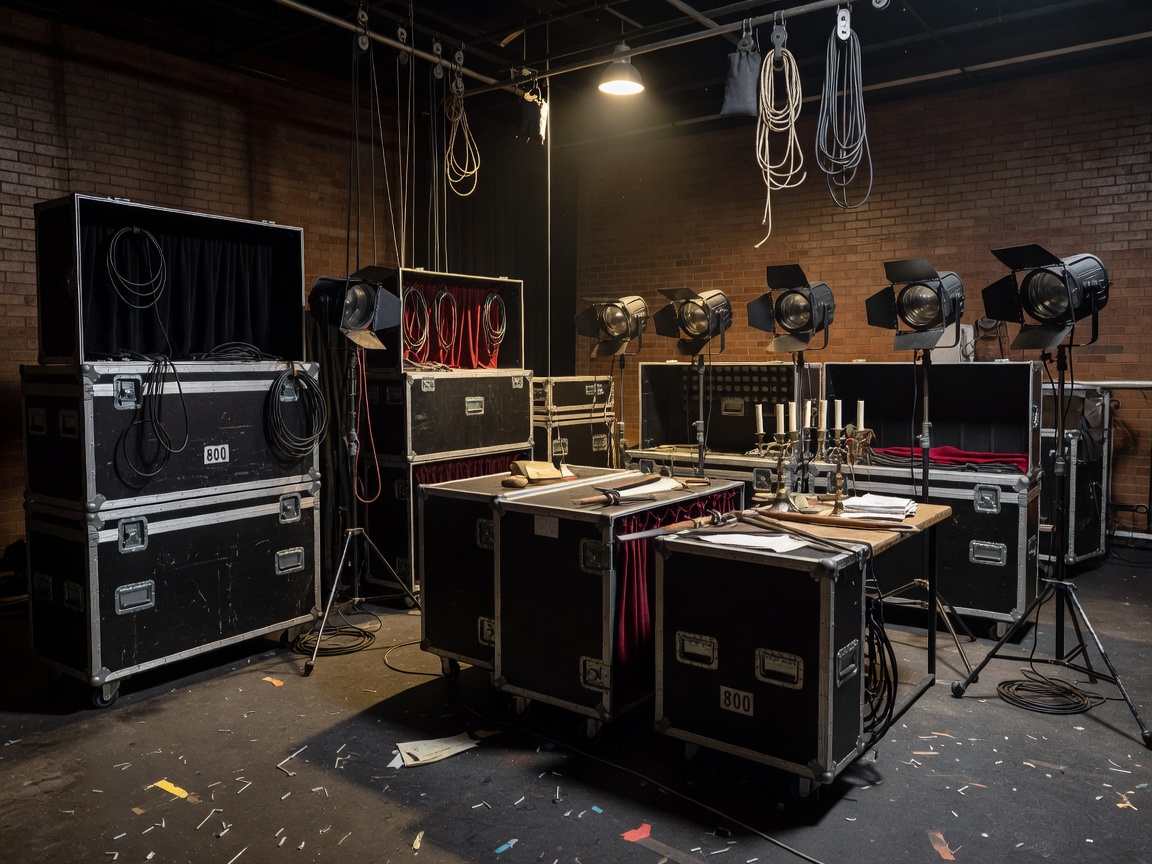
Separate the production groups
Theatre equipment often moves through a production cycle. It may arrive for preparation, move into use, return for checking and then remain available for touring or a later season. Storage planning should reflect that cycle. Separate production cases, props, temporary staging, lighting-related equipment, scenic components and backstage operational items where their handling and access needs differ.
Cases should have visible descriptions and a clear return location. Props may require grouping by production, scene or storage condition. Temporary staging and larger components need a location plan that accounts for dimensions, access routes and approved venue procedures. Lighting-related equipment should remain under the venue’s established technical, electrical and safety controls. This guide does not provide electrical or rigging instructions.
Use identification that survives changeovers
A production title alone may become unclear when equipment is reused. Combine a project or production reference with an item, group or case identifier. Record the current location and status. A simple status vocabulary can distinguish ready, in use, awaiting inspection, incomplete and retired. The vocabulary must be defined for the venue team and applied consistently.
Identification should be visible without relying on memory. Labels need to remain legible during ordinary handling and should be placed where they can be checked safely. A location code should point to the storage area, not imply that the item is permanently owned by a particular production.
Plan access around the working calendar
Access requirements change across rehearsals, performances, get-outs, touring periods and seasonal closures. Frequently accessed cases should be planned into locations that venue personnel can reach through approved routes. Less frequently used scenery or event equipment can be assigned to longer-term locations, but its record must remain current.
Touring equipment benefits from a return-to-storage routine. On return, check the case or group against its list, note visible condition issues and separate incomplete equipment from ready equipment. Do not assume that a closed case is complete. Any inspection involving electrical systems, suspended equipment, machinery or structural components should follow venue procedures and be handled by qualified personnel.
Props and backstage equipment
Props may be small, numerous and easy to misplace. Grouping by production, scene or functional set can reduce unnecessary searching. Use containers that match the size and fragility of the contents. Backstage consumables and reusable equipment should not share an unclear category. A concise description, quantity and next-use note are more useful than a broad label.
Seasonal equipment needs a review date. Before long storage, document condition, packaging and expected next use. Before return to production, confirm that the equipment is complete, accessible and suitable for review. Storage records support preparation but do not replace technical sign-off.
Working checklist
- Separate cases, props, staging, scenic and backstage groups.
- Record production, item or group references.
- Assign locations by access frequency and dimensions.
- Document condition after return and before reuse.
- Keep incomplete or awaiting-inspection equipment distinct.
- Use qualified personnel for technical, electrical, rigging or machinery matters.
- Review touring and seasonal equipment before the next call.